
Introduction
You tap a link in Safari on your iPhone, the download bar flashes, and then the file seems to vanish. Many users feel confused at this point and wonder where downloads actually go on iOS.
Apple has changed how file downloads work on iPhone in recent versions of iOS. Safari now has a built-in download manager, and most downloaded files live in the Files app, not in Photos or Mail. If you do not know where to look, it can feel like the file never downloaded at all.
This guide shows you exactly how to see downloads on Safari iPhone, step by step. You will learn how to find your files from Safari, locate them in the Files app, change where Safari saves them, and organize or delete them. You will also see how to fix common download problems, so you stop losing files and wasting time.
By the end, you will have a simple routine: download, find, open, and manage any file you grab with Safari on your iPhone.

Understanding How Downloads Work on Safari for iPhone
Before you start tapping buttons, it helps to understand what downloads actually mean on an iPhone in 2024. Safari, iOS, and the Files app all work together, and each plays a different role.
What Counts as a Download on iPhone in 2024
On an iPhone, a download usually means a file that Safari saves locally or to iCloud Drive. Common download types include:
- PDF files from websites
- Word, Excel, or PowerPoint documents
- ZIP archives
- Music or audio files (when allowed by the website)
- Images that you save as files
- Configuration files or profiles from trusted sites
When you tap a link, Safari decides whether to open the item in the browser or download it as a file:
- If Safari can display the content, like many PDFs or images, it often opens the file in a new tab. You can then choose to share or save it.
- If the file type is not meant for direct viewing, Safari usually downloads it and adds it to your download list.
So a download is not just something you tap. It is specifically a file that Safari saves to your device or to iCloud Drive so you can access it later.
Safari’s Download Manager vs. Files App
Safari and the Files app handle different parts of the download process, and both matter when you want to see downloads on Safari iPhone.
Safari’s download manager shows:
- Active downloads
- Recently downloaded files
- Basic actions like pause, resume, and retry
The Files app stores:
- The actual downloaded files
- Folders that contain your downloads
- All the tools for organizing, moving, and deleting files
Think of Safari as the front desk that starts downloads and shows their status, and the Files app as the file cabinet where everything ends up and stays.
Why You Can’t Find Downloads in the Photos App Sometimes
Many users expect to see downloads in the Photos app, especially when they download pictures. That does not always happen, which leads to confusion.
Here is how it usually works:
- If you touch and hold an image in Safari and tap ‘Save Image’, the picture usually goes to the Photos app.
- If you tap a link to an image file that Safari treats as a normal file to download, the image goes to the Downloads folder in the Files app, not to Photos.
Documents, PDFs, ZIP files, and most other file types never appear in Photos. They live in the Files app. Once you know this split, it becomes much easier to find what you downloaded.
Now that you understand the roles of Safari and Files, you are ready to see exactly how to view your downloads directly inside Safari without leaving the browser.
How to See Your Downloads in Safari on iPhone
Safari has a built-in download manager that shows your recent downloads in one place. Learning how to open this list is the fastest way to check whether a file actually downloaded.
Using the Safari Download Button in the Toolbar
When you download something in Safari, a small button appears in the toolbar. It looks like a circle with a downward arrow. This button is your main way to see downloads on Safari iPhone.
To see your downloads in Safari:
- Open the Safari app on your iPhone.
- Look at the toolbar:
- On most iPhones, the toolbar appears at the bottom of the screen.
- On some older layouts or custom settings, it may appear at the top.
- Find the download icon. It looks like a small circle with a downward-facing arrow inside.
- Tap the download icon.
A small panel opens with a list of recent and active downloads. If you do not see the icon at all, Safari may not have any current or recent downloads, or the list may have been cleared.
Viewing Download Progress and Recent Downloads
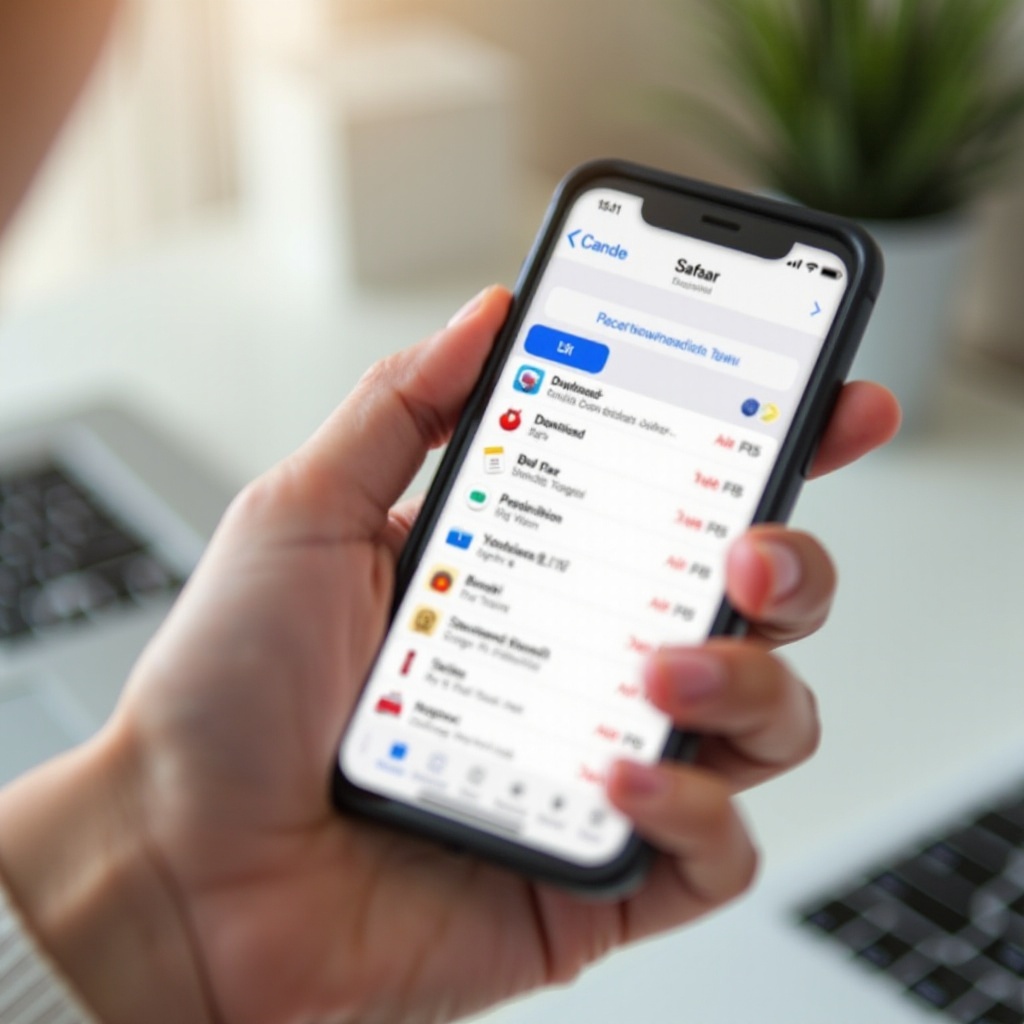
When you tap the download icon, Safari shows a compact list with:
- The file name
- A progress bar if the download is still in progress
- A check mark if the download has finished
- A small error or warning icon if something failed or was canceled
Here is how to use this list efficiently:
- Watch the progress bar to see if the download is still running or has stopped.
- When a file finishes, look for a small magnifying glass icon next to it.
- Tap the magnifying glass to jump directly to the file in the Files app.
Safari does not keep this list forever. Depending on your settings, the download list may clear when downloads finish, when you close all Safari tabs, or when you restart your device. That is why it is smart to also know how to access your files in the Files app.
Reopening a File From Safari’s Download List
You can open a downloaded file directly from Safari’s download panel without hunting for it in Files.
To reopen a file from the download list:
- Tap the download icon in Safari.
- Find the file you want in the list of downloads.
- Tap the file name.
Safari will either:
- Preview the file in a new tab, for PDFs, images, and some document types, or
- Open the file in a suitable app installed on your iPhone, like a document editor or media player.
If Safari shows an error or says the file is missing, the file may have been moved or deleted from the Files app. In that case, you will need to download it again.
You now know how to see and open downloads without leaving Safari. Next, you will learn how to find those same files from the Files app, which is where they are actually stored.
How to Find Safari Downloads in the Files App
Safari saves your downloaded files to a specific folder that you access through the Files app. This is where you will find documents, PDFs, ZIP files, and many images that you download as files rather than as photos.
Opening the Downloads Folder in the Files App
To see your Safari downloads in the Files app:
- Open the Files app on your iPhone.
- Tap ‘Browse’ in the bottom-right corner if you are not already on the browse screen.
- Under ‘Locations’, tap either ‘On My iPhone’ or ‘iCloud Drive’. The correct place depends on your Safari download settings.
- Look for a folder named ‘Downloads’.
- Tap the ‘Downloads’ folder.
Inside this folder, you should see many of the files you downloaded from Safari. By default, they appear in date order, with the most recent downloads at the top.
Using Search to Locate a Specific Downloaded File
If you do not remember where the file saved, or you changed download locations in the past, search across all locations in Files.
To search for a downloaded file:
- Open the Files app.
- Tap ‘Browse’ to go to the main screen.
- Swipe down slightly on the file list to reveal the search bar at the top.
- Type part of the file name or the file extension, such as ‘.pdf’, ‘.zip’, or ‘.docx’.
- Tap ‘Search’.
Files will search across visible locations like ‘On My iPhone’ and ‘iCloud Drive’ and show any matches. If you see your file in the results, tap it to open. You can also touch and hold the file and tap ‘Get Info’ to confirm its exact location.
Opening, Sharing, and Duplicating Downloaded Items
Once you find your downloaded file in the Files app, you can open it, send it, or make copies.
To open a file:
- Tap the file once. It opens in a viewer or in a compatible app, depending on the file type.
To share a file:
- Touch and hold the file.
- Tap ‘Share’.
- Choose Messages, Mail, AirDrop, or another app from the share sheet.
To duplicate a file:
- Touch and hold the file.
- Tap ‘Duplicate’.
- A copy appears in the same folder, usually with ‘2’ added to the name.
The Files app gives you full control over your Safari downloads. Now that you can find and open them easily, the next step is to control where Safari saves them, so your downloads always land in the best place for your workflow.
How to Change Safari’s Download Location on iPhone
By default, Safari uses a standard Downloads folder, but you do not have to stick with that setup. You can switch between saving downloads on your iPhone or in iCloud Drive, and you can even pick a custom folder.
Switching Between ‘On My iPhone’ and iCloud Drive
To change where Safari stores downloads:
- Open the Settings app on your iPhone.
- Scroll down and tap ‘Safari’.
- Scroll to the ‘General’ section.
- Tap ‘Downloads’.
- Choose one of these options:
- ‘iCloud Drive’
- ‘On My iPhone’
When you pick ‘On My iPhone’, downloads save directly to local storage, which does not use your iCloud space. When you pick ‘iCloud Drive’, downloads can sync across your devices that use the same Apple ID.
Setting a Custom Folder for Safari Downloads
You can also set a specific folder for Safari downloads, which is helpful if you want to separate work files from personal files.
To set a custom download folder:
- Follow steps 1–4 above to get to the ‘Downloads’ screen in Settings.
- Tap ‘Other…’ under the list of locations.
- In the Files interface that appears, choose a folder inside iCloud Drive or inside ‘On My iPhone’.
- Tap the folder you want to use.
- Tap ‘Open’ or ‘Done’, depending on what appears.
Safari will now save downloads to this custom folder. If you ever cannot find a file, remember to check this folder in the Files app.
Pros and Cons of Saving to iCloud vs Local Storage
Choosing between ‘On My iPhone’ and iCloud Drive affects how you access downloads and how much space you use.
Saving to ‘On My iPhone’:
- Pros:
- Does not use iCloud storage.
- Files are available even when you are offline.
- Cons:
- Files stay on one device only.
- You can lose files if you erase or replace the iPhone without a recent backup.
Saving to iCloud Drive:
- Pros:
- Files sync across iPhone, iPad, and Mac signed in with the same Apple ID.
- You can access downloads from other devices or from iCloud.com.
- Cons:
- Uses your iCloud storage space.
- Large downloads may take time to upload and sync.
Pick the option that fits how you actually use your devices. Once Safari stores your files in a place that makes sense, you can focus on keeping those files tidy and under control.
How to Manage and Organize Safari Downloads
A Downloads folder fills up quickly if you do not manage it. A bit of regular cleanup and structure helps you find files faster and keeps your iPhone storage from getting overloaded.
Renaming and Moving Files Into Folders
Clear file names and simple folders make a big difference when you search later.
To rename a file in the Files app:
- Open the Files app and go to your Downloads folder.
- Touch and hold the file you want to rename.
- Tap ‘Rename’.
- Type a clear name, then tap ‘Done’.
To move a file into a folder:
- Touch and hold the file.
- Tap ‘Move’.
- Choose a destination folder, or tap the folder-with-plus icon to create a new folder.
- Tap ‘Move’ again to confirm.
Use descriptive names like ‘Invoice-April-2024.pdf’ or ‘Trip-Booking-Details.pdf’ so you can spot the right file at a glance and find it with search.
Creating a Clean Folder Structure for Downloads
You do not need a complex system. A simple folder structure is often enough.
You might create folders such as:
- ‘Work’
- ‘School’
- ‘Receipts’
- ‘Travel’
- ‘Media’
To create a new folder in Files:
- Open the location where you want the folder, such as iCloud Drive or ‘On My iPhone’.
- Swipe down slightly to reveal the toolbar at the top.
- Tap the folder icon with a plus sign labeled ‘New Folder’.
- Enter a folder name and tap ‘Done’.
Move related downloads into these folders as you go. Over time, your Downloads folder becomes a temporary staging area instead of a permanent dumping ground.
Deleting Old Downloads to Free Up iPhone Storage
Downloads can take up a lot of space, especially large PDFs, installers, and video or audio files. Deleting old items that you no longer need is an easy way to reclaim storage.
To delete downloads in Files:
- Open the Files app and go to Downloads or another folder with old files.
- Tap the three dots in the top-right corner.
- Tap ‘Select’.
- Tap the files you want to remove.
- Tap the trash icon to delete them.
Deleted files usually move to the ‘Recently Deleted’ folder in Files, where they stay for a limited time before permanent removal. If you need space right away, open ‘Recently Deleted’ and empty it.
Good organization solves many problems, but sometimes downloads still fail or disappear. In those cases, a few quick troubleshooting steps usually fix the issue.
Troubleshooting Common Safari Download Issues on iPhone
Even when you know how to see downloads on Safari iPhone, things can go wrong. Files may not start downloading, get stuck, or seem to vanish from the download list.
Downloads Not Starting or Stuck on ‘Waiting’
If a file will not download or gets stuck on ‘Waiting’, try the following steps:
- Check your internet connection.
- Make sure Wi-Fi or cellular data is on.
- Try loading another webpage to confirm the connection works.
- Pause and resume the download.
- Tap the Safari download icon.
- Tap the pause icon next to the stuck download.
- Tap again to resume and see if it finishes.
- Close and reopen Safari.
- Open the app switcher.
- Swipe Safari up to close it.
- Reopen Safari and start the download again.
- Restart your iPhone. If the issue continues, a restart often clears temporary glitches.
Some websites also limit downloads, use special download managers, or require you to sign in first. Make sure you are logged into the site before you try again.
Can’t See the Download Button or Download List
If the download icon never appears, even when you expect a file to download, check a few basic things.
First, confirm you actually started a download. Tapping a regular link that just opens a web page will not show the Safari download icon.
To test the download button:
- Visit a site that offers a sample PDF or document download.
- Tap a clear ‘Download’ link.
- Watch for the arrow icon to appear in the Safari toolbar.
If the icon still does not show:
- Go to Settings > Safari.
- Scroll and review your settings in ‘General’ and ‘Privacy & Security’.
- Check if you have content blockers or configuration profiles that might interfere with downloads from certain sites.
If nothing changes, update iOS to the latest version, then try the same test again. Updates often fix small display bugs and download issues.
What to Do When You Still Can’t Find a Downloaded File
Sometimes Safari shows a completed download, but you cannot find the file in the Files app. When that happens, work through these steps:
- Open Files and check both of these paths:
- ‘On My iPhone’ > ‘Downloads’
- ‘iCloud Drive’ > ‘Downloads’
- Use the search bar in Files. Type the file name, part of the name, or the file type, such as ‘pdf’ or ‘zip’.
- Go to Settings > Safari > Downloads and confirm which location and folder Safari is using for downloads.
If you still cannot find the file, it may never have finished downloading or may have been removed. Download the file again, and right after it finishes, tap the magnifying glass next to it in Safari’s download list to jump directly to its location in Files.
Once your downloads work reliably and you know how to fix issues, you can make the whole process smoother with a few extra settings and shortcuts.
Tips to Make Downloading on Safari Easier in 2024
You now understand how to see downloads on Safari iPhone, how to find them in the Files app, and how to fix common problems. A few small tweaks can make the whole experience even faster and more convenient.
Adjusting Safari Settings for Faster Access to Downloads
Safari’s settings can speed up your download routine and reduce confusion when you save files.
To fine-tune Safari for easier downloads:
- Open Settings > Safari.
- Tap ‘Downloads’ and choose a location you will remember, such as ‘On My iPhone’ or a clear iCloud Drive folder.
- Keep that folder consistent, so you always know where new files go.
You can also make sure Safari is not set to clear history and website data too aggressively if that interferes with how you track recent downloads.
Using Favorites and Shortcuts in the Files App
Favorites and shortcuts in the Files app reduce the number of taps it takes to reach your downloads.
To favorite your Downloads folder:
- Open Files and go to your Downloads folder.
- Touch and hold the ‘Downloads’ folder.
- Tap ‘Favorite’.
The folder now appears under ‘Favorites’ in the Files sidebar, so you can open it with a single tap. You can repeat this for other important folders, such as ‘Work’, ‘School’, or any custom folder you use for Safari downloads.
Keeping Your iPhone Updated for the Best Safari Experience
Safari and the Files app improve over time as Apple updates iOS. New updates can fix bugs, improve download reliability, and add useful features.
To keep your device current:
- Open Settings.
- Tap ‘General’.
- Tap ‘Software Update’.
- Install any available updates after you back up your device.
Staying updated helps ensure that Safari handles downloads smoothly and that your iPhone stays secure.

Conclusion
Finding files you downloaded in Safari does not have to be a mystery. Once you understand how Safari’s download manager works and how it connects to the Files app, your downloads become easy to track and open.
You learned how to see downloads on Safari iPhone using the download button, how to open the Downloads folder in Files, and how to change where Safari saves files. You also saw how to rename, move, and delete downloads so your storage stays under control. Finally, you explored troubleshooting steps and practical tips that help when files do not appear or get stuck.
Use this guide as a reference the next time a file seems to vanish after you tap a download link. With a few quick checks in Safari and Files, you can find, open, and manage any Safari download on your iPhone with confidence.
Frequently Asked Questions
Why can’t I see my Safari downloads on my iPhone?
Most of the time you cannot see Safari downloads because they are in the Files app, not in Photos. Open the Files app, tap ‘Browse’, and look for a ‘Downloads’ folder under ‘On My iPhone’ or ‘iCloud Drive’. If the file does not appear, go to Settings > Safari > Downloads to confirm which location Safari uses, then check that folder again.
Where do PDF and document downloads go on iPhone in 2024?
PDF and document downloads usually go to the ‘Downloads’ folder in the Files app. To find them, open Files, tap ‘Browse’, then open either ‘On My iPhone’ or ‘iCloud Drive’ and tap ‘Downloads’. If you set a custom download folder in Safari settings, check that folder instead.
How do I automatically save Safari downloads to iCloud Drive?
To automatically save Safari downloads to iCloud Drive, go to Settings > Safari > Downloads. Select ‘iCloud Drive’ or tap ‘Other…’ and choose a folder inside iCloud Drive. After you make this change, new Safari downloads save to that iCloud Drive folder, and you can access them from your other Apple devices that use the same Apple ID.