
Introduction
The call recording option not showing in Samsung phones frustrates many Galaxy users, especially in the United States. You may remember using a record button on an older device or you saw it on someone else’s phone, but on your Galaxy there is no trace of it. When you rely on phone calls for business, support, or agreements, losing this feature can feel like a serious problem.
This guide walks you through the real reasons the call recording option disappears on Samsung phones and what you can actually do about it in 2024. You will see how to confirm whether your phone supports call recording, where the settings should appear, and how US carriers often block the feature. You will also learn about safe workarounds and the legal rules you must respect in the US.
By the end, you will know whether your Samsung can show the call recording option, which fixes are worth trying, and what alternatives make sense if your phone or carrier blocks recording completely.
Why the Call Recording Option Disappears on Samsung Phones in 2024
Before you dig into settings and apps, you need to understand why the call recording option not showing in Samsung is usually not a simple bug. In many cases Samsung, Google, and your carrier have deliberately limited or removed the feature.
How Samsung’s built‑in Phone app handles call recording
Samsung includes a native call recording feature inside its own Phone app on many Galaxy phones. When recording is enabled, you see a record icon on the in‑call screen and a dedicated ‘Record calls’ section in the Phone app settings. That is the official, system‑level recorder.
However, Samsung does not treat every region and carrier the same way. The company ships different firmware builds, and each build follows local laws, privacy expectations, and carrier requirements. One Galaxy model can show full call recording options in one country but hide them completely in another.
Because of this, two people with what looks like the same Samsung phone can have different options: one has a visible record button, and the other has nothing, even after updates and resets.
Impact of Android privacy and security changes on call recording
Google has tightened Android’s privacy rules in recent versions. These changes mainly restrict third‑party call recording apps, but they also influence what manufacturers like Samsung allow.
Android now limits direct access to the in‑call audio stream. Old recording apps that worked fine on earlier versions often fail or record only one side of the conversation on newer devices. Samsung’s own recorder can bypass some of these limits because it runs at a system level, but Samsung still has to respect Google’s policies and local laws.
This combination of stricter privacy rules and Google’s control over in‑call audio is a big reason why you see fewer working recorders on modern Samsung phones.
Regional and carrier restrictions for US Samsung users
Legal and carrier rules add another layer. Some regions allow call recording more freely, so Samsung keeps the feature available there. Other markets are stricter, and Samsung disables or hides recording to avoid legal risk.
In the US, many Galaxy phones use firmware that carriers like Verizon, AT&T, and T‑Mobile customize. Those carrier builds often remove or hide Samsung’s call recording option entirely. Even if the hardware supports recording, the software you get from your carrier can block it.
Once you understand that the missing record button might not be a glitch, the next step is to check whether your specific phone and software even support call recording.
Step 1 – Confirm Your Samsung Phone and Software Support Call Recording
If the call recording option is missing, you should first confirm what device you have and what software it runs. Some Samsung models in certain regions will never show a recording option, no matter what settings you try.
Check your Samsung Galaxy model and variant (unlocked vs carrier)
Start by identifying your exact phone and whether it is unlocked or carrier‑branded:
- Open Settings.
- Scroll down and tap About phone.
- Note the Model number and any carrier name shown.
Unlocked Samsung phones sold directly by Samsung or major retailers generally use less restricted firmware. Carrier‑branded phones from Verizon, AT&T, T‑Mobile, and others often run firmware that the carrier modified. That carrier firmware is where the call recording option is most likely to be disabled.
If you see a carrier logo when the phone boots or many pre‑installed carrier apps, you probably have a carrier‑locked model with tighter controls.
Find your Android and One UI version in Settings
Next, you need to know your software version, because Samsung’s options can change by version as well as by region.
- In Settings, tap About phone.
- Tap Software information.
- Note the Android version and One UI version.
In 2024, recent One UI releases still include call recording in many non‑US regions. In US builds, the same version may hide the option. This information helps you compare your device against online guides and screenshots that show where call recording should be.
Understand typical call recording support for popular US Galaxy phones
For popular Galaxy S‑series and A‑series phones:
- Unlocked international variants often keep call recording.
- US carrier variants frequently remove or hide it.
- Some unlocked US variants might support recording only when set to a region where it is allowed.
If your device is a US carrier model and you never saw call recording from day one, the missing option is likely intentional. Still, there is a chance your dialer app is the issue, so you should confirm which Phone app you use before giving up.
Step 2 – Make Sure You’re Using the Correct Phone App
The next common reason for the call recording option not showing in Samsung is using the wrong calling app. Even if your firmware supports recording, Samsung’s recorder only works inside Samsung’s own Phone app.
Difference between Samsung Phone and Google Phone apps
Samsung ships its own Phone app on Galaxy devices. Many users, however, switch to Google’s Phone app or another dialer because it looks cleaner or offers spam protection. That change can happen when you set a new default app or restore settings from another Android phone.
The important part is this: Samsung’s call recording feature does not appear in Google’s Phone app. If Google Phone is your default dialer, the record button and related settings will never show, even if your device supports them.
How to set Samsung Phone as the default calling app
To make sure you are using Samsung’s dialer:
- Open Settings.
- Tap Apps.
- Tap the three‑dot menu in the top‑right corner and select Default apps.
- Tap Phone app.
- Choose Phone (Samsung) or the Samsung‑branded Phone icon.
Once you set Samsung Phone as the default, place a test call and watch the call screen. If your firmware allows recording, a record button may appear in the in‑call options.
What it looks like when the call recording button is available
When call recording is enabled, you usually see two clear signs:
- A Record button on the in‑call screen.
- A Record calls section in the Phone app settings.
If Samsung Phone is the default dialer and you still do not see these, the feature may be off or hidden in the settings. That is the next thing to check.
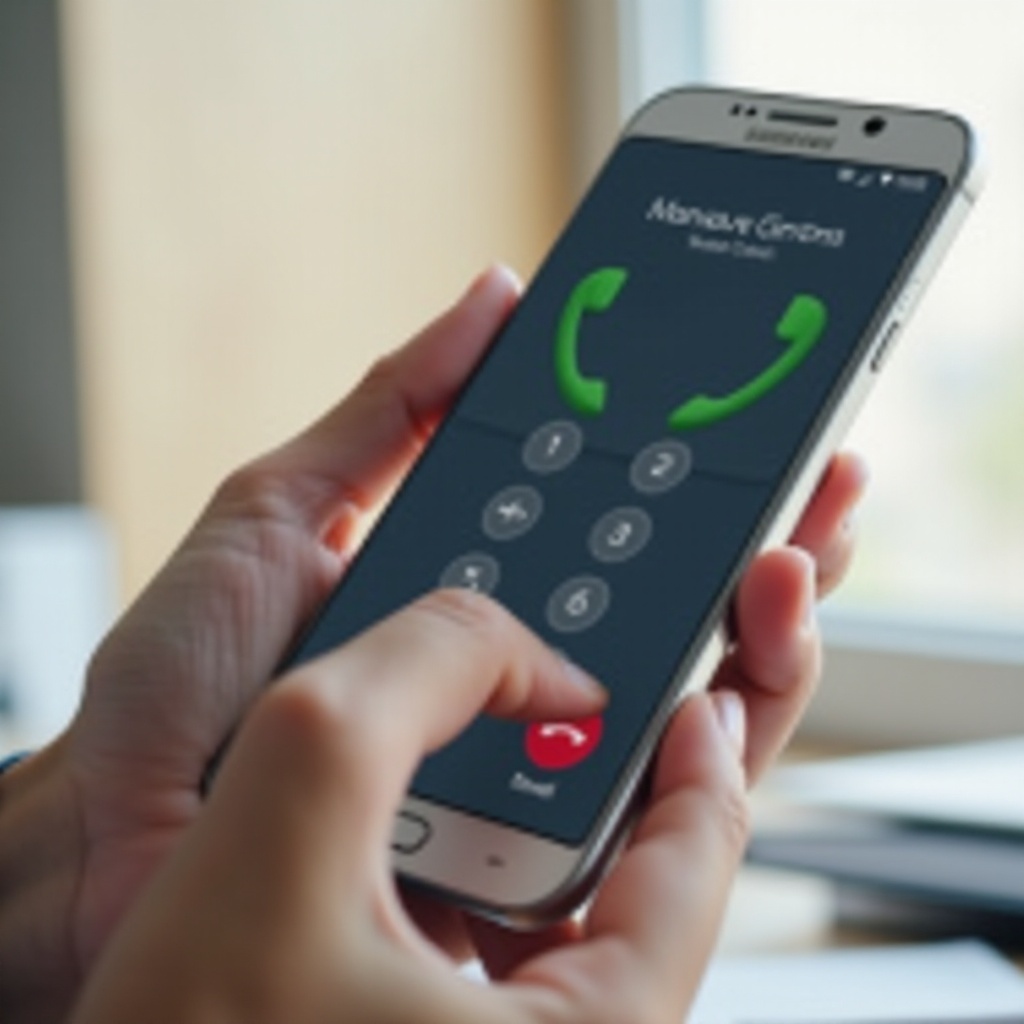
Step 3 – Look for Call Recording Inside Samsung Call Settings
With the correct dialer active, you need to confirm whether call recording exists in the settings but has not been turned on. Many users miss this menu because it is placed inside the Phone app, not the main Settings screen.
Path to ‘Record calls’ in the Samsung Phone app
Follow these steps:
- Open the Phone app from your home screen or app drawer.
- Tap the three dots in the upper‑right corner.
- Choose Settings.
- Look for a section called Record calls.
If you find the ‘Record calls’ section, your firmware supports Samsung’s built‑in recorder. If the section is completely missing, you may be dealing with a regional or carrier block, which we cover later.
Enable manual recording and automatic call recording
Inside Record calls, you will usually see options such as:
- Auto record calls.
- A choice to record:
- All calls.
- Calls from selected numbers.
- Calls with unsaved numbers.
- A toggle that controls whether the record button appears during live calls.
To use manual recording, make sure the option that shows the record icon in‑call is turned on. For automatic recording, enable auto record and choose the set of calls you want the phone to capture.
Then make a quick test call and confirm that the record button appears and that a recording is saved afterward.
Check storage location and permissions for saving recordings
Call recordings need enough storage space and the right permissions. Inside the Record calls menu you can usually see the save location, like internal storage in a ‘Call’ or ‘Recordings’ folder.
If recordings fail to save or you see errors:
- Go to Settings → Apps → Phone.
- Tap Permissions.
- Confirm the app has Microphone and Storage access.
When you have confirmed that settings are correct but the option is still missing, it is time to fix possible software issues that might hide or break the feature.
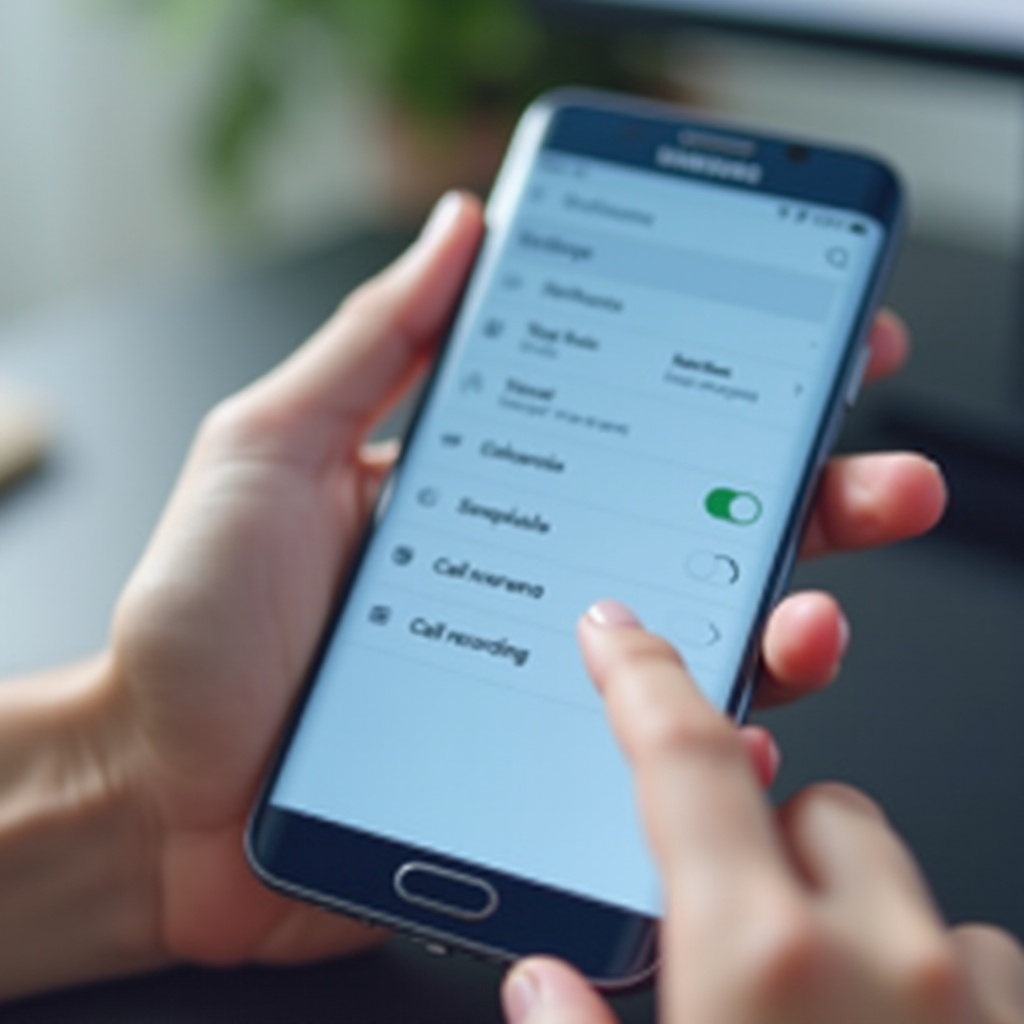
Step 4 – Fix Call Recording Not Showing with Basic Troubleshooting
Sometimes the call recording option not showing in Samsung is caused by outdated apps, corrupted cache, or misconfigured settings. You should rule out these basic issues before you assume your carrier has blocked recording.
Update the Phone app from Galaxy Store and Google Play
Outdated system apps can lead to missing controls or bugs. To update:
- Open the Galaxy Store, search for Phone, and install any available update.
- Open the Google Play Store, go to Manage apps & device, and update system apps.
- Open Settings → Software update → Download and install and install any One UI or Android updates.
After all updates finish, restart your phone and check the Samsung Phone settings again for the ‘Record calls’ option.
Clear cache and data for the Samsung Phone app
A damaged cache or mis‑saved configuration can hide features. Resetting the Phone app often fixes this.
- Go to Settings → Apps.
- Find and tap Phone (the Samsung Phone app).
- Tap Storage.
- Tap Clear cache, then tap Clear data.
This step resets the app to its default state. Your contacts stay safe, but your call history may be wiped. Afterward, open the Phone app again, accept any prompts, and recheck the settings.
Reset app preferences and when to consider a factory reset
If the problem continues, reset app preferences across the system:
- Go to Settings → Apps.
- Tap the three dots at the top.
- Tap Reset app preferences and confirm.
This restores default permissions, default apps, and disabled apps, but it does not delete personal data.
Only if all else fails should you consider a factory reset. Before you do that:
- Back up your phone with Samsung Cloud, Smart Switch, or Google Drive.
- Then go to Settings → General management → Reset → Factory data reset.
After a reset, set up the phone again, update the software, and check for the recording option. If it is still missing, the feature is almost certainly disabled by your carrier or region.
Step 5 – When Carrier or Region Blocks Call Recording
Once you have updated, reset, and checked every setting without success, it is time to consider that the call recording option not showing in Samsung might be by design. This is very common on US carrier‑locked Galaxy phones.
Signs your US carrier firmware has disabled the feature
You are likely facing a carrier or regional block if:
- Your phone is branded by Verizon, AT&T, T‑Mobile, or another US carrier.
- You never saw a call recording button or menu from the first day you used the phone.
- The Record calls option does not appear in the Samsung Phone settings at all.
- Other users with an unlocked or international version of the same model can record calls, but you cannot.
In these cases, there is no hidden toggle you can flip to restore call recording. The firmware itself is configured to hide or remove the feature.
Why unlocked Samsung phones are more flexible than carrier‑locked ones
Unlocked Galaxy devices usually run firmware that Samsung controls more directly. That firmware often has call recording enabled for certain regions or can enable it when used with SIM cards from countries where recording is allowed.
Carrier‑locked phones run firmware that carriers modify. That firmware can:
- Remove menus and options related to recording.
- Limit which updates you receive.
- Enforce policy decisions that you cannot override.
For users who rely on call recording, choosing an unlocked model that supports recording in its intended region is usually a better long‑term solution than trying to work around a carrier‑locked phone’s limits.
Why changing CSC or flashing firmware is risky for everyday users
You may see online tutorials that promise to restore Samsung call recording by:
- Changing the CSC (country or carrier code).
- Flashing firmware from another region.
- Rooting the phone and modifying system files.
These methods can cause serious problems:
- Your warranty may be void.
- You can lose important carrier functions like 5G, VoLTE, Wi‑Fi calling, or visual voicemail.
- You might block future software updates or even brick the device.
- Security‑sensitive apps such as banking, payments, and work tools may stop working.
For most users, these risks outweigh the benefit of built‑in recording. Instead, you should look at safer workarounds and, when needed, third‑party solutions.
Step 6 – Using Third‑Party Call Recording Apps on Samsung in 2024
When you cannot use Samsung’s own recorder, third‑party call recording apps might seem like the next obvious step. Because of Android’s new privacy rules, however, their behavior on modern Samsung phones is limited and inconsistent.
What has changed for third‑party call recorders on modern Android
Google now restricts direct access to in‑call audio. Many older call recording apps relied on that direct access, so on newer Android versions they no longer work properly.
Most third‑party recorders today use one of two methods:
- Recording via the microphone, often requiring speakerphone.
- Using accessibility services to detect call states and trigger audio capture.
Because of this, you may see issues such as:
- Only your own voice being clear on recordings.
- The other side’s voice being very quiet or missing.
- Recordings that stop randomly or fail to start.
You must test each app on your specific phone and carrier, because results differ widely.
Permissions, accessibility services, and typical limitations
Third‑party recording apps usually need broad permissions to work at all. They often ask for:
- Microphone access to capture your voice.
- Storage access to save audio files.
- Accessibility permissions to detect calls and control recording.
To set one up:
- Install a reputable app from Google Play with recent positive reviews.
- Open the app and follow its setup wizard.
- Grant the requested permissions and enable its accessibility service.
- Enable any setting that says ‘record both sides’ or ‘internal audio’ if available.
Even with all permissions, some Samsung firmware builds and carriers still block useful audio capture. That is why testing is essential.
How to test audio quality and reliability on your specific device
To see whether a third‑party recorder is usable:
- Make a short test call to a friend or to another phone you own.
- Use the app to record the call.
- Play the recording and check:
- Is your own voice clear and loud enough?
- Can you hear the other person clearly?
- Did the recording start when the call began and stop when it ended?
If the other side is barely audible or recordings fail often, that app is not a reliable solution on your phone. You can try a few alternative apps, but if none of them work well, it is time to focus on legal considerations and practical alternatives.
Step 7 – Legal and Privacy Considerations for Call Recording in the US
Before you try any method to fix the call recording option not showing in Samsung, you must consider the legal side. Recording calls in the US can be legal, but only when you follow state‑specific consent rules.
One‑party vs two‑party consent and why it matters
US states fall into two main categories regarding call recording laws:
- One‑party consent states allow recording if at least one person on the call (for example, you) knows and consents. You do not need to tell the other person, though it is often still wise.
- Two‑party (all‑party) consent states require every participant to know about and agree to the recording before you start.
If you live in a two‑party consent state and record someone without telling them, you may break the law. The other person’s location can also matter, so when you are unsure, treat the call as if stricter rules apply and get explicit consent.
Best practices for notifying other callers and staying compliant
To stay on the safe side:
- Check your state’s rules using an official legal or government source.
- At the start of the call, tell the other person you want to record, for example:
- ‘I’d like to record this call so I can remember the details. Is that okay?
- Only continue recording if they agree.
- Avoid sending recordings to others unless it is clearly legal and necessary.
Clear communication protects you and builds trust with clients, colleagues, and friends.
Safely storing, backing up, and deleting recorded calls
Call recordings can hold confidential details: account numbers, addresses, medical information, and more. You need to handle them carefully.
Good practices include:
- Keeping recordings on a secured phone with a strong screen lock.
- Avoiding automatic uploads to unencrypted cloud services.
- Encrypting backups if possible.
- Deleting recordings you no not need anymore, especially when they contain sensitive data.
Even if you decide that recording is legal for you, protecting those files remains your responsibility.
Once you understand the legal boundaries, you can look at realistic alternatives to built‑in recording when your Samsung phone and carrier do not fully support it.
Practical Alternatives If You Still Can’t Enable Call Recording
If every attempt fails and the call recording option not showing in Samsung persists, you still have ways to keep reliable records of important calls. These alternatives are often safer and more predictable than fighting firmware blocks.
Using speakerphone plus a second device or voice recorder
The simplest workaround uses hardware instead of system‑level call recording:
- Start your call on the Samsung phone and turn on speakerphone.
- Place another phone or a digital voice recorder next to it.
- Use the second device’s voice recorder to capture the conversation.
This method works with almost any phone and does not rely on Android’s in‑call audio access. You still must follow consent laws, but it bypasses most technical restrictions.
Using VoIP services with built‑in recording options
If you often need to record calls for work, consider using VoIP or conferencing tools that include recording features. Many business phone systems and online meeting platforms offer:
- One‑click recording buttons.
- Automatic announcements that inform participants the call is being recorded.
- Secure cloud storage for recordings.
These services are designed with compliance in mind and often handle notification and storage better than ad‑hoc phone recordings.
Note‑taking and call transcription apps as safer substitutes
In many cases, you do not need the full audio file; you just need a clear record of decisions or instructions. In those situations, you can:
- Take structured notes during the call using a notes app.
- Use a speech‑to‑text or transcription app immediately after the call to capture key points.
- Send a follow‑up email summarizing what you agreed on and ask the other person to confirm.
These habits avoid the legal and technical complexity of full call recording while still giving you reliable documentation.
Conclusion
The call recording option not showing in Samsung phones has many causes, but most are not simple glitches. In 2024, the issue usually comes from a mix of Google’s privacy rules, Samsung’s regional firmware decisions, and strict US carrier policies. By checking your model, software version, default Phone app, and the ‘Record calls’ menu, you can quickly see whether built‑in recording is even possible on your device.
If official options do not appear, you can experiment with third‑party recorders, but Android’s newer limits mean that many of them will not record both sides clearly. In that case, offline recording with a second device, VoIP tools with built‑in recording, or detailed note‑taking may serve you better and more reliably.
Whatever method you choose, make sure it is legal where you live. Learn your state’s consent rules, always inform other callers when required, and store any recordings or notes securely. Once you accept the real limits of your Samsung and your carrier, you can pick the best practical way to keep track of important calls without constant frustration.
Frequently Asked Questions
Why is the call recording option not showing on my Samsung Galaxy in the US?
On many US Samsung phones, the call recording option is disabled at the firmware level by carriers or regional settings. Even if the hardware can record calls, carrier builds from Verizon, AT&T, T-Mobile and others often remove the ‘Record calls’ menu from the Samsung Phone app. If you have checked your default Phone app, updated your software, and still see no recording option in Samsung Phone settings, your device is likely running firmware that blocks call recording completely.
Can I legally record phone calls on my Samsung if I live in a two-party consent state?
You can legally record calls in a two-party consent state only if every person on the call knows about the recording and agrees to it before you start. That usually means you must clearly tell the other party at the beginning of the call that you want to record, and hear them agree. If they refuse, you should not record. Because laws vary by state and sometimes depend on where both parties are located, always check your local rules or consult legal advice when you are unsure.
Are third-party call recorder apps safe and reliable on Samsung phones in 2024?
Third-party call recorder apps can be safe when you choose reputable options from Google Play, but their reliability on modern Samsung phones is limited. Newer Android versions restrict access to in-call audio, so many apps can only record your own voice clearly or produce low-volume recordings of the other side. They also require sensitive permissions, such as microphone, storage, and accessibility access. You should test each app with short calls on your device, see if both sides record clearly and consistently, and uninstall any app that behaves strangely or fails to capture calls reliably.