
Introduction
The auto lock feature on iPhone controls how long your screen stays on before it turns off and locks itself. This simple setting affects three key things every day: how long your battery lasts, how safe your data is, and how comfortable your phone feels to use.
Set auto lock too short and your screen goes dark while you are reading, cooking, or checking a map. Set it too long and anyone who picks up your iPhone can see your messages, emails, and photos if you forget to lock it. Get it wrong and your battery drains faster than it should.
With current iOS versions across 2024, Apple keeps adding features like Always-On display and Attention Aware that interact with auto lock. That means you need to know more than where the setting is. You need to understand how it works, what each option means, and how to fix it when the Auto-Lock option is grayed out.
This guide walks you through everything: what auto lock actually does, the best settings for different people, how to solve common problems, and how to use it alongside newer iPhone features without frustration.
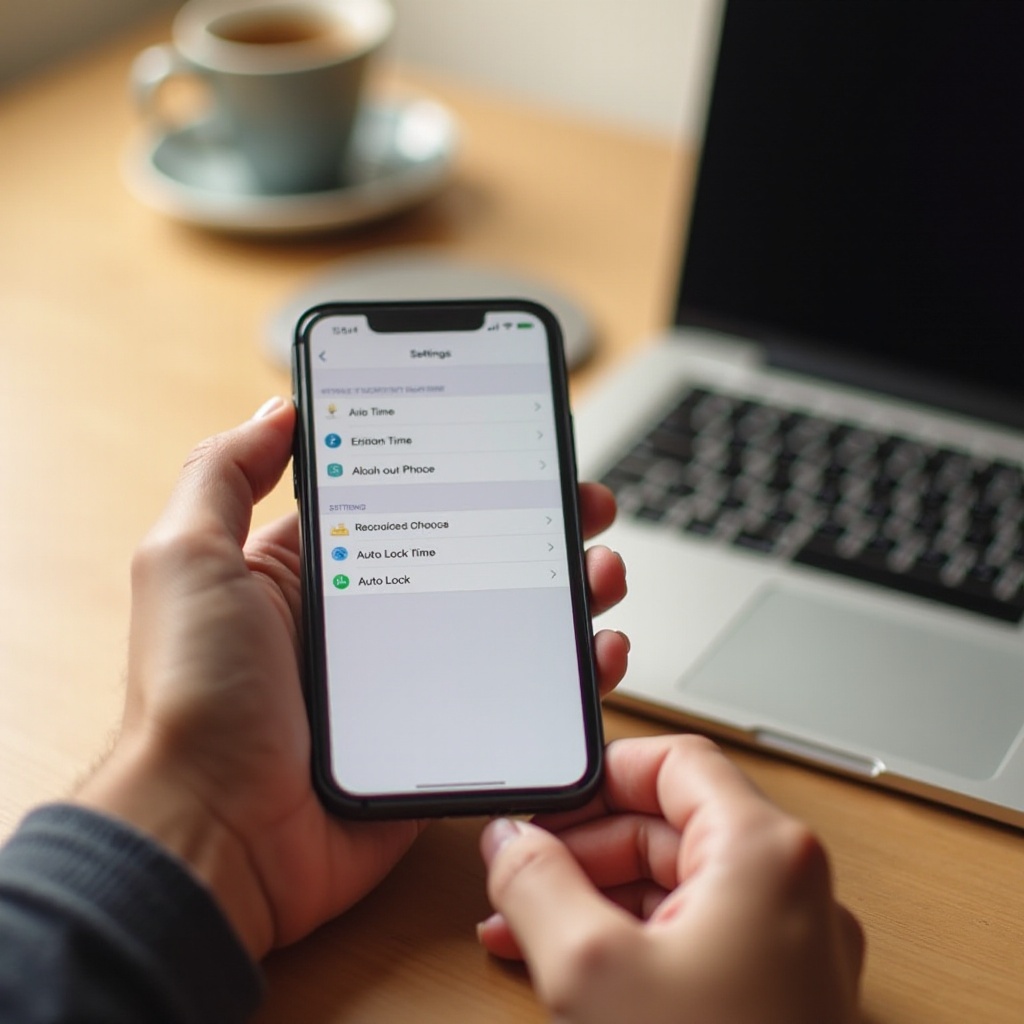
What Is the Auto Lock Feature on iPhone?
The auto lock feature on iPhone controls how long your screen stays awake when you are not actively using it. After a fixed time, your iPhone turns the display off and locks itself. You then need Face ID, Touch ID, or your passcode to get back in.
This setting runs quietly in the background, but it shapes how your phone behaves all day. To use it well, it helps to understand the basics of how it works and how it differs from manual locking, so you can make smarter choices when you change your settings.
How Auto Lock Works Behind the Scenes
Auto lock starts counting from the last time you touched the screen. If you do not tap, swipe, or type again within the set time, iOS:
- Dims the screen.
- Turns the display off.
- Locks the device so it needs authentication to unlock.
The countdown resets with every interaction. So if Auto-Lock is set to 1 minute and you tap the screen at second 59, the timer restarts from zero.
Certain activities pause the normal auto lock behavior:
- Watching a video in full-screen in most media apps.
- Using navigation in many map apps.
- Being on a phone call with the screen against your ear (the proximity sensor disables the display).
These exceptions stop your iPhone from locking while you actively use it, even if you are not touching the screen constantly.
Auto Lock vs. Manually Locking Your iPhone
You can lock your iPhone in two ways:
- Manually: Press the side button (or top button on older models).
- Automatically: Wait for the auto lock timer to expire.
Both methods lead to the same state:
- The screen turns off.
- The phone locks.
- You must use Face ID, Touch ID, or your passcode to unlock.
The big difference is control. Manual locking is instant and intentional. Auto lock is automatic and prevents the phone from staying unlocked when you forget to lock it yourself.
Why Auto Lock Matters for Everyday Use
Auto lock affects three things you care about every day:
- Battery life: A bright screen is one of the biggest battery drains. Shorter auto lock times reduce how long the display stays on needlessly.
- Security and privacy: If your iPhone lies on a table unlocked, anyone nearby can open apps, read messages, or change settings. Auto lock closes that window fast.
- Convenience: A setting that is too aggressive makes your iPhone feel like it is fighting you when you read long content or follow instructions.
Because so many other settings tie into auto lock, your next step is to learn how to change it and what each time option actually means, so you can tune your iPhone instead of putting up with a default that does not fit your habits.
How to Change Auto Lock Settings on Your iPhone
Now that you know what auto lock is and why it matters, you need to know where to change it and what each option does. Apple keeps this setting in the Display & Brightness menu, but there are a few details worth paying attention to when you adjust it.
Step-by-Step Guide to Finding Auto Lock in Settings
Follow these steps to change your auto lock settings:
- Open the Settings app.
- Scroll down and tap Display & Brightness.
- Tap Auto-Lock.
- You will see a list of time options (and sometimes ‘Never’).
- Tap the time you prefer to apply it instantly.
You do not need to restart your iPhone. The new auto lock time takes effect right away.
If you do not see the Auto-Lock option, or if it is grayed out and cannot be tapped, another setting is controlling it. We will cover that later in the troubleshooting section, after you understand what each timing option actually means.
Auto Lock Time Options Explained (30 Seconds to Never)
Most iPhones provide these auto lock choices:
- 30 Seconds
- 1 Minute
- 2 Minutes
- 3 Minutes
- 4 Minutes
- 5 Minutes
- Never (on some devices and setups)
Here is how they differ in practice:
- 30 Seconds: Very secure and battery-friendly, but can feel too aggressive. Good for people who care about privacy and rarely read long content without touching the screen.
- 1 Minute: A solid balance for most users. It keeps your phone safe while avoiding constant interruptions.
- 2–3 Minutes: Better if you read a lot on your phone or use it for reference while working or cooking.
- 4–5 Minutes: More comfortable for people who hate frequent locking, but less ideal for security and battery.
- Never: The display stays on until you manually lock the phone. Use this only in special situations.
Apple designs these choices to cover a wide range of habits, but you still need to pick the one that matches how you actually use your iPhone day to day.
Recommended Default Auto Lock Setting for Most Users
Most people should start with 1 Minute. It gives:
- Strong protection if you put your phone down.
- Good battery savings compared to longer times.
- A small enough delay that unlocking does not feel annoying.
If you read on your iPhone often, test 2 Minutes and see if it feels better without sacrificing too much battery and security.
Once you choose a baseline, the next step is to tailor auto lock for specific situations and users. That way, the setting supports your lifestyle instead of forcing you to adapt to a one-size-fits-all option.
Best Auto Lock Settings for Different Use Cases
Your ideal auto lock setting depends on how you use your iPhone, where you use it, and who uses it. A single recommendation does not work for everyone, so it helps to think through your priorities and adjust the auto lock feature on iPhone to match.
Ideal Auto Lock Settings for Privacy and Security
If privacy and security are your main concerns, choose a shorter time:
- 30 Seconds if you handle sensitive data such as work emails, health apps, or banking.
- 1 Minute if you want a secure default that still feels natural.
Also make sure:
- You use Face ID or Touch ID and a strong passcode.
- You do not set Auto-Lock to Never on a device that leaves your home or office.
- You lock your device manually before you walk away in public places.
Shorter auto lock settings reduce the chance someone can grab your unlocked phone and access your apps and accounts.
Auto Lock Suggestions for Battery Optimization
If battery life is your biggest headache, you want the screen off as much as possible:
- Use 30 Seconds or 1 Minute.
- Turn on Low Power Mode when your battery is low (but remember it may force a shorter auto lock).
- Lower screen brightness and turn off Always-On display on supported models if you do not need it.
You can also:
- Turn off Raise to Wake if your screen turns on too often while you walk.
- Avoid leaving maps or other bright apps open on your desk.
The shorter your auto lock time, the less time your display stays lit when you are not actively using it, which helps stretch your battery over a long day.
Auto Lock Recommendations for Kids, Seniors, and Work Phones
Different groups benefit from different settings:
- Kids’ iPhones or iPads
- Longer times like 2–3 Minutes can reduce frustration if they are still learning.
-
Use Screen Time to manage app access instead of relying only on locking.
-
Seniors’ iPhones
- Many seniors prefer 2–3 Minutes so they do not feel rushed.
-
Pair this with large text and higher brightness for readability.
-
Work or corporate devices
- Many companies enforce 30 Seconds or 1 Minute through device management.
- If your work phone feels too strict, your IT team may have set a policy.
Once you dial in these use-specific settings, you may still run into a common problem: Auto-Lock is grayed out. Understanding why that happens will save you a lot of confusion the next time your screen starts locking faster than you expect.
Why Is My Auto Lock Grayed Out on iPhone?
Sometimes you open Settings, go to Display & Brightness, tap Auto-Lock, and see the option disabled in gray. You cannot change the time, and your screen locks faster than you want.
This usually happens because another feature or policy is taking control. Before you assume something is broken, check a few common causes that often explain why the auto lock feature on iPhone seems stuck.
The Impact of Low Power Mode on Auto Lock
When Low Power Mode is on, iOS makes several changes to save energy. One of them is forcing a short auto lock time, often 30 Seconds.
To check this:
- Open Settings.
- Tap Battery.
- Look at Low Power Mode.
If it is on:
- Turn Low Power Mode off.
- Go back to Display & Brightness > Auto-Lock and try again.
Once you disable Low Power Mode, Auto-Lock should become editable again unless another restriction applies.
Screen Time and Parental Controls Restrictions
Screen Time can also lock down the auto lock setting. This is common on kids’ devices or shared family phones.
To check Screen Time:
- Open Settings.
- Tap Screen Time.
- If prompted, enter the Screen Time passcode.
- Check Content & Privacy Restrictions and any device-level settings that might affect display sleep.
If a parent, guardian, or account holder set limits, you may need their help to change them. Once the restriction is removed, auto lock options should unlock.
Managed or Supervised Devices (Work or School iPhones)
If your iPhone is managed by your employer or school:
- A configuration profile may enforce strict auto lock rules.
- The device may show a message in Settings like ‘This iPhone is supervised and managed.
In that case:
- You cannot change auto lock beyond what the profile allows.
- You must contact your IT department or administrator for changes.
Understanding these controls makes the auto lock feature less mysterious. The next step is to see how auto lock behaves alongside newer display tools that Apple has added in 2024.
Auto Lock and Newer iPhone Features in 2024
Modern iPhones add extra layers on top of basic auto lock. Features like Always-On display, Attention Aware, Raise to Wake, and Tap to Wake all affect how your screen behaves.
Knowing how these interact helps you avoid confusion, wasted battery, and the feeling that your iPhone is acting on its own. When you tune these features to match your auto lock settings, the phone feels consistent and predictable.
Auto Lock vs. Always-On Display on Compatible iPhones
On some recent iPhone models with OLED screens, you can use Always-On Display. This keeps a low-power version of your Lock Screen visible, even when your phone is locked.
Here is how it works with auto lock:
- Auto lock still controls when the phone locks.
- Once locked, Always-On Display shows a dimmed clock, widgets, and notifications.
- Touching the screen or lifting the phone wakes it fully.
If you want maximum battery life:
- Consider turning Always-On Display off in Settings > Display & Brightness.
- Keep a short auto lock time to reduce full-brightness usage.
How Attention-Aware Features Affect Screen Lock
Attention Aware Features use the TrueDepth camera (Face ID) to see if you are looking at the screen. When these features are on, your iPhone can:
- Keep the screen bright while you look at it.
- Delay auto lock if it detects your attention.
To adjust this:
- Open Settings.
- Tap Face ID & Passcode.
- Enter your passcode.
- Scroll to Attention Aware Features and toggle it on or off.
If you feel your iPhone is locking too quickly while you read, make sure Attention Aware Features are on and nothing covers the front camera, such as a thick case, a sticker, or your finger.
Raise to Wake, Tap to Wake, and Their Role with Auto Lock
Two more features affect how often the screen turns on:
- Raise to Wake: The screen lights up when you lift your iPhone.
- Tap to Wake: A tap on the display wakes it.
Both make your phone feel more responsive, but they can make the screen turn on more often than you think.
To manage them:
- Go to Settings > Display & Brightness.
- Toggle Raise to Wake on or off.
- For Tap to Wake, go to Settings > Accessibility > Touch and adjust Tap to Wake.
If you want stricter battery control, turn Raise to Wake off and rely on the side button. Auto lock will still work the same once the screen is on, but your display will wake less often by accident.
With these tools in mind, you are ready to tackle a common frustration: a screen that goes dark too fast while you use your iPhone and interrupts whatever you are doing.
How to Stop Your iPhone Screen from Turning Off Too Fast
A screen that locks too quickly is one of the top complaints about the auto lock feature on iPhone. The good news is you can adjust this without giving up security completely.
The key is to find a time that gives you room to read and work, while still locking the phone promptly when you stop using it.
Adjusting Auto Lock Without Sacrificing Security
To stop your screen from turning off so fast:
- Set Auto-Lock to 1 Minute or 2 Minutes instead of 30 seconds.
- Keep Face ID or Touch ID enabled so unlocking stays quick.
- Turn on Attention Aware Features so your iPhone detects when you are looking at it.
This way you get more time to read or follow instructions, but your phone still locks itself if you forget to put it to sleep.
Temporary Tweaks for Reading, Cooking, or Presentations
Sometimes you only need a longer auto lock setting for a short period. For example:
- Following a recipe in the kitchen.
- Reading a long article or PDF.
- Showing slides or notes from your phone in a meeting.
For these moments:
- Set Auto-Lock to 3–5 Minutes before you start.
- After you finish, go back to 1–2 Minutes as your everyday setting.
This keeps your daily setup secure while giving you flexibility for special tasks, without leaving your iPhone unlocked all day.
Using Auto-Lock-Friendly Apps for Video and Streaming
Most media apps already work around auto lock:
- Video apps like YouTube, Netflix, and Apple TV keep the screen awake while video plays.
- Music and podcast apps usually let the screen lock while audio continues.
If your screen still goes dark while watching something:
- Check if the video is in full-screen mode.
- Make sure you are not in Low Power Mode, which can behave more aggressively in some situations.
When movies and shows work properly, you do not need to set Auto-Lock to ‘Never’ just to watch a video. You can keep a secure, battery-friendly setting and let your apps manage the screen during playback.
Common Auto Lock Problems and How to Fix Them
You may still hit snags with the auto lock feature on iPhone, even after you set everything correctly. Most issues fall into a few patterns that you can fix with quick checks.
By walking through the most common problems, you can usually restore normal behavior without a full reset or a visit to a repair shop.
iPhone Keeps Locking Too Quickly
If your iPhone locks faster than you expect:
- Confirm Auto-Lock is set to 1–2 Minutes, not 30 seconds.
- Check that Low Power Mode is off in Settings > Battery.
- Make sure Attention Aware Features are turned on (if your device supports them).
If the problem persists, watch how you use the phone. If you do not touch the screen while reading, the timer may still expire. In that case, tap the screen occasionally to reset the timer or increase the Auto-Lock duration slightly.
iPhone Won’t Lock or Screen Stays On Too Long
If your iPhone seems to never lock:
- Confirm Auto-Lock is not set to Never.
- Check whether any apps, like navigation or some games, are keeping the screen awake.
- Turn off Guided Access if it is on, as it can override normal locking in some cases.
If your phone stays on only when certain apps run, the app is choosing to keep the device awake. Change the auto lock time for general use, but accept that some apps need the screen on to work well.
When to Reset Settings or Contact Apple Support
If nothing works:
- Go to Settings > General > Transfer or Reset iPhone > Reset > Reset All Settings.
-
This does not erase your data but resets settings like Wi‑Fi, Bluetooth, and display preferences.
-
If the Auto-Lock option still misbehaves, contact Apple Support or visit an Apple Store.
- You may have a software bug that needs a deeper fix.
- In rare cases, a management profile you do not recognize could be installed.
Once your basic problems are resolved, you can focus on fine-tuning auto lock to match how you want your iPhone to feel every day, instead of constantly fighting the screen.
Tips to Get the Most Out of Auto Lock on iPhone
The auto lock feature on iPhone works best when you treat it as part of a set of habits, not a single switch. A few small tweaks can make your phone more secure and pleasant to use.
When you align auto lock with your security preferences, battery goals, and display features, your iPhone feels smoother and more personal.
Creating a Balance Between Convenience and Protection
To strike a good balance:
- Use 1–2 Minutes for Auto-Lock as your everyday default.
- Use Face ID or Touch ID so unlocking is quick.
- Manually lock your phone when you put it down in public places.
These steps keep your data safe while your phone still feels fast and responsive, and you do not need to fight constant lock screens when you use it.
Battery-Saving Habits That Work with Auto Lock
Pair auto lock with other simple habits to extend battery life:
- Reduce screen brightness or turn on Auto-Brightness.
- Turn off Always-On Display if you do not need it.
- Disable Raise to Wake if the screen turns on too often in your pocket or bag.
With a short auto lock time and these small changes, you can usually gain noticeable battery improvements without changing how you use your apps.
Quick Settings to Review After Updating iOS in 2024
After big iOS updates in 2024 and beyond, review:
- Auto-Lock: Make sure your preferred time is still set.
- Attention Aware Features: Ensure they remain on if you rely on them to keep the screen awake while you look at it.
- Display & Brightness settings like Always-On display and Raise to Wake.
Updates can sometimes add new options or shift defaults. A quick check keeps your iPhone behaving the way you expect and prevents surprise battery drain or sudden changes in how quickly your screen locks.
Conclusion
The auto lock feature on iPhone looks simple, but it touches almost every part of how your phone feels: battery life, security, privacy, and day‑to‑day comfort. When you understand how the timer works, how to change it, and how it interacts with features like Low Power Mode, Always-On display, and Attention Aware, you gain full control over your experience.
Start with a balanced setting like 1 or 2 minutes. Adjust for special situations, like reading or cooking, without leaving your phone unlocked all the time. Fix grayed-out options by checking Low Power Mode, Screen Time, and any work or school profiles. Combine these settings with good habits and you get a device that stays secure, lasts longer on a charge, and does not interrupt you when you need it most.
Mastering auto lock is not about one perfect number. It is about finding the mix of settings that matches how you actually live and work with your iPhone, so the device adapts to you instead of the other way around.
Frequently Asked Questions
Why does my iPhone auto lock after 30 seconds even when I change the setting?
If your iPhone keeps locking after 30 seconds even when you pick a longer time, another feature is overriding your choice. First, check Low Power Mode in Settings > Battery. When it is on, iOS often forces a 30-second auto lock to save energy. Turn it off and then adjust Auto-Lock again. Next, check Screen Time in Settings > Screen Time. Parental controls or device restrictions can lock the Auto-Lock option. You might need the Screen Time passcode to change them. Finally, if your iPhone is managed by a company or school, a configuration profile may enforce a strict auto lock time. In that case, only your IT administrator can change it.
Is it safe to set Auto Lock to ‘Never’ on my iPhone?
Setting Auto-Lock to ‘Never’ keeps your screen on until you manually press the side button to lock it. This can be useful in short-term situations, like giving a presentation, following a recipe, or using your iPhone as a reference screen while it is on a stand. For everyday use, though, it is not safe. Anyone can access your apps and data if you leave the phone unattended. On OLED screens, leaving static content up for long periods can also increase the risk of image retention. Battery drains faster because the display never turns off by itself. Use ‘Never’ only when you can watch the device and switch back to a timed setting afterward.
What is the best Auto Lock setting for saving battery without making my iPhone annoying to use?
For most people, the best compromise is to set Auto-Lock to 1 minute. This saves more battery than longer times but does not feel as aggressive as 30 seconds. Turn on Face ID or Touch ID so unlocking is fast and does not feel like a hassle. Enable Attention Aware Features if your iPhone supports them, so the screen can stay bright longer when it knows you are looking at it. If you read a lot on your phone, try 2 minutes instead and see if that feels better. If you want maximum battery savings and do not mind slightly more frequent unlocking, you can choose 30 seconds, but many users find 1 minute to be the best balance between comfort and efficiency.